


Skincare timelines are ranges, not guarantees.
The time it takes to see results depends on the active ingredient, its concentration and formulation, how often it is used, the concern being treated, and the other ingredients in your routine.
In this guide, we examine the timeline for 9 common skincare ingredients to show results, supported by clinical studies that measure meaningful improvement during continued use.
The ingredients featured in this guide are:
Some changes—such as temporary hydration, smoothness, or a more reflective surface—can show up after one application. Others, like reducing acne, fading uneven pigment, and softening fine lines, usually require consistent use for 8–24 weeks before you can see results in the mirror.
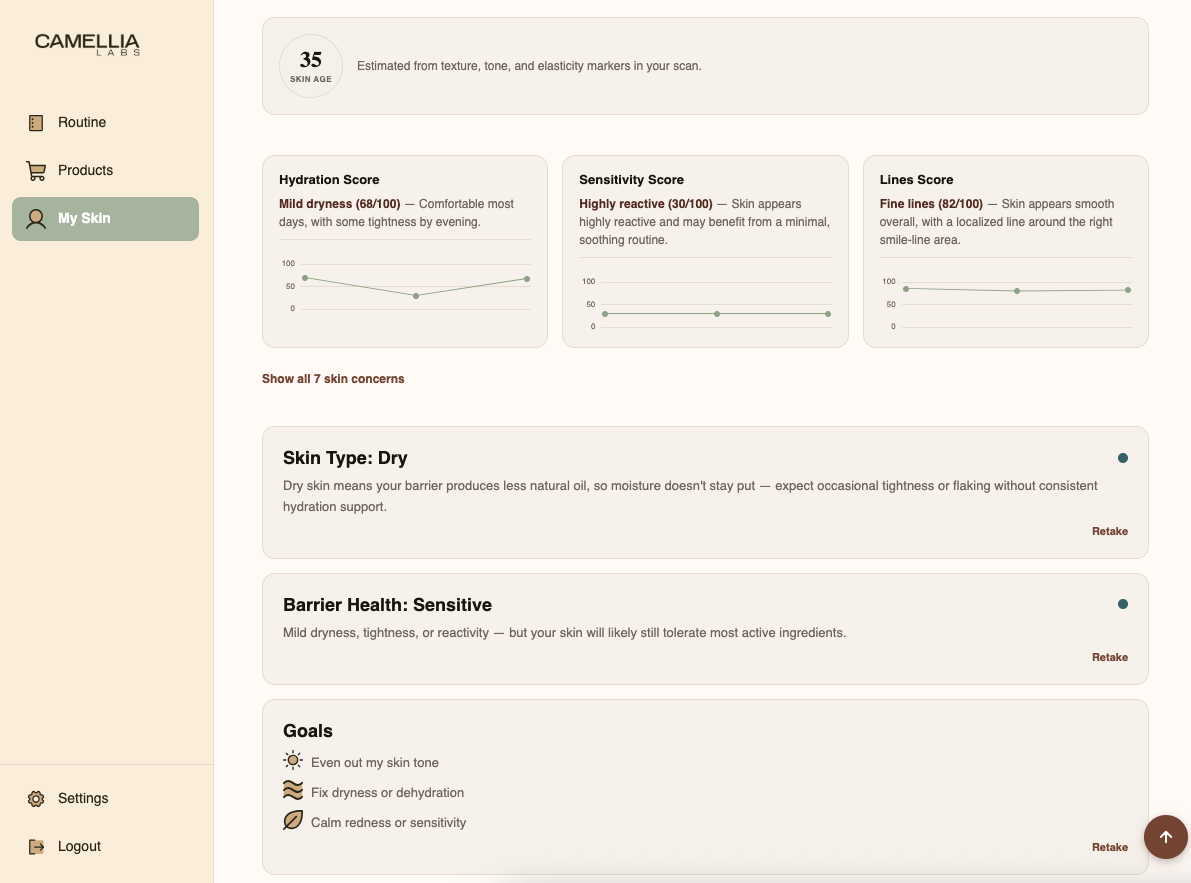
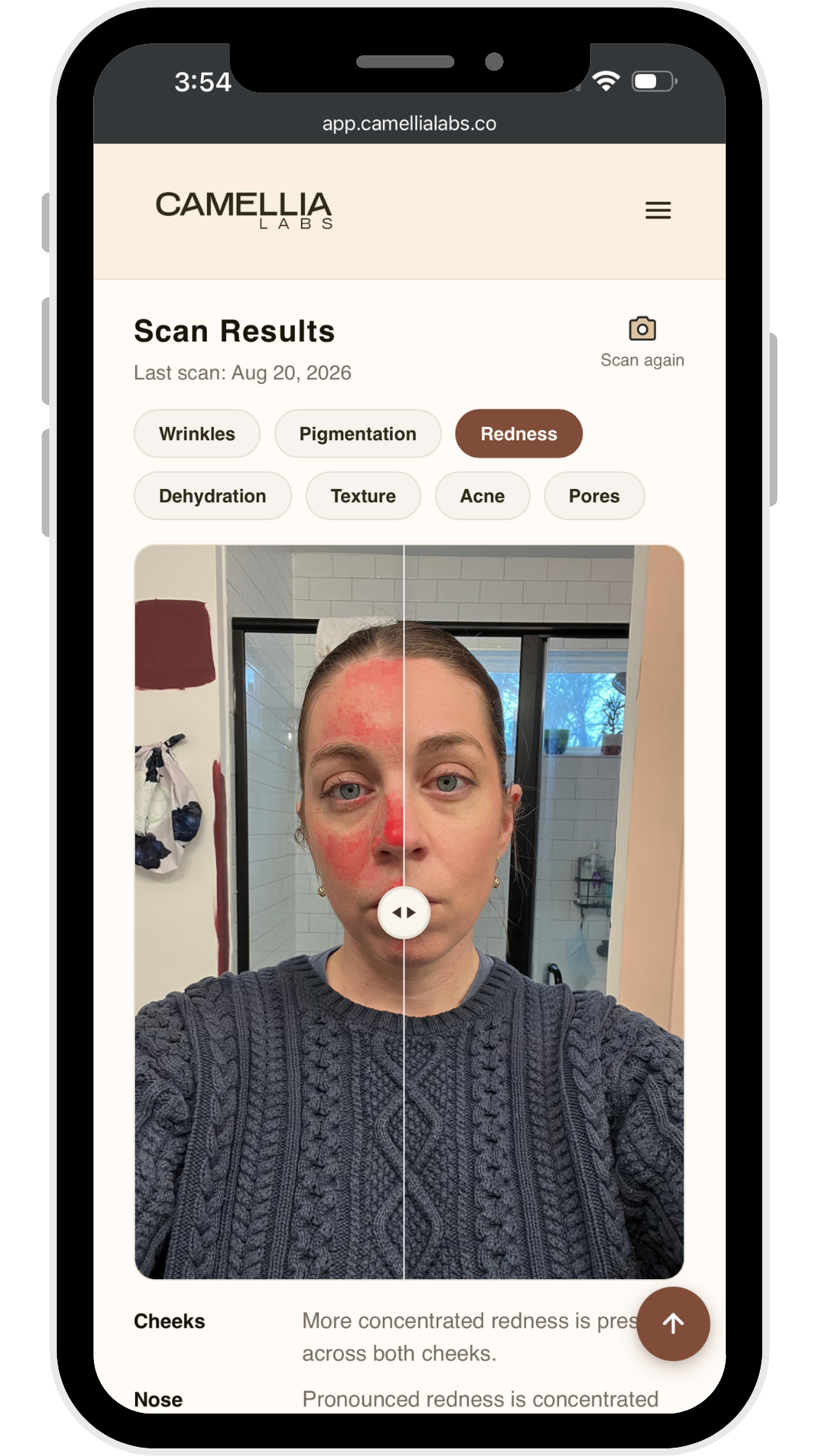
A Camellia Labs skin scan can show early signs of progress on your goals before you can see them yourself in the mirror! Camellia Labs is free to use, and you can scan as many times as you like without hitting a paywall.
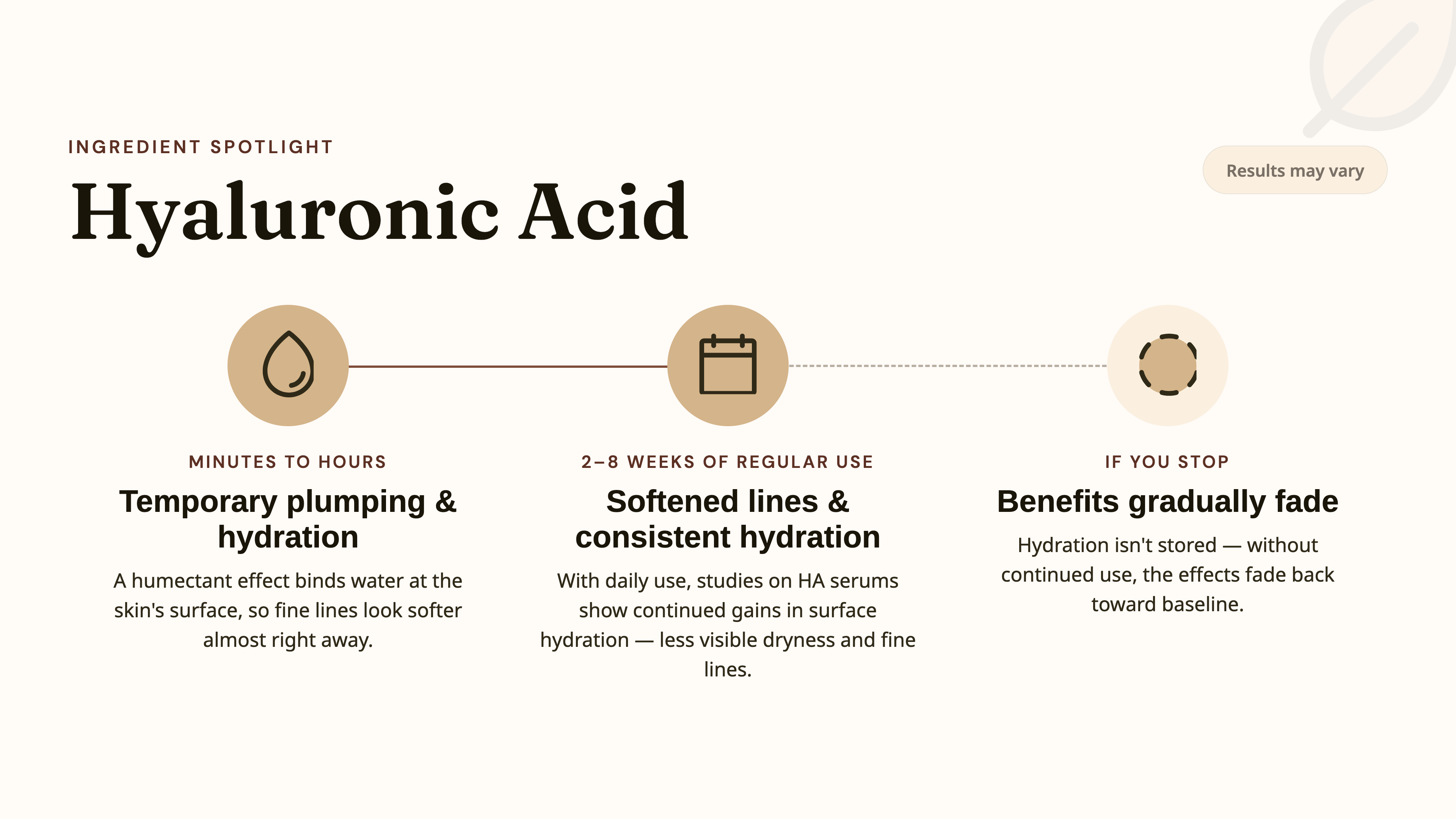
Hyaluronic acid helps bind water in the outermost layer of your skin. That can make skin feel softer and plumper immediately after application.
With regular use, studies of HA serums have shown continued improvements in the appearance of fine lines and wrinkles due to an increase in surface hydration. After several weeks, you might see smoother-looking skin overall. However, since HA softens through hydration and not the skin's structure or collagen production, results are fleeting and subtle.
What happens if you stop: since HA works at the surface and doesn't alter the skin's structure, results will fade quickly if you stop using the ingredient.
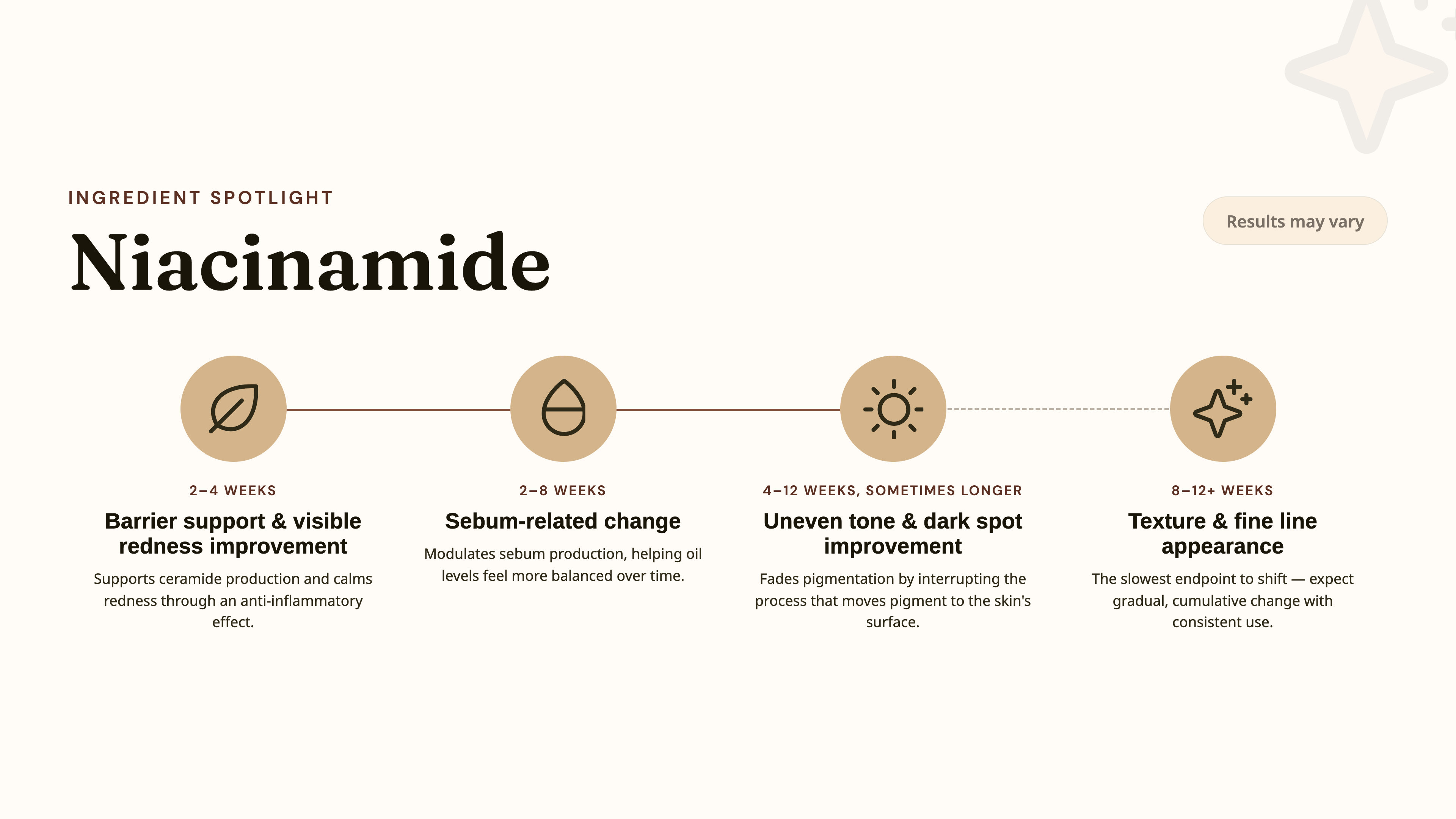
Barrier support and visible redness improvement: 2–4 weeks
Sebum-related change: 2–8 weeks
Uneven tone and dark spot improvement: 4–12 weeks, sometimes longer
Texture and fine line appearance: 8–12+ weeks
Niacinamide has multiple clinically studied effects, including support for barrier function, reduced transepidermal water loss (TEWL), modulation of sebum, and pigmentation improvements. Niacinamide strengthens your skin barrier by supporting ceramide production, calms redness through its anti-inflammatory effect, and fades pigmentation by interrupting the process that moves pigment to the surface.
Because these endpoints are different, there is no single “niacinamide timeline.” Expect to see improvements in redness within a few weeks, but texture, tone, and pigmentation can take months.
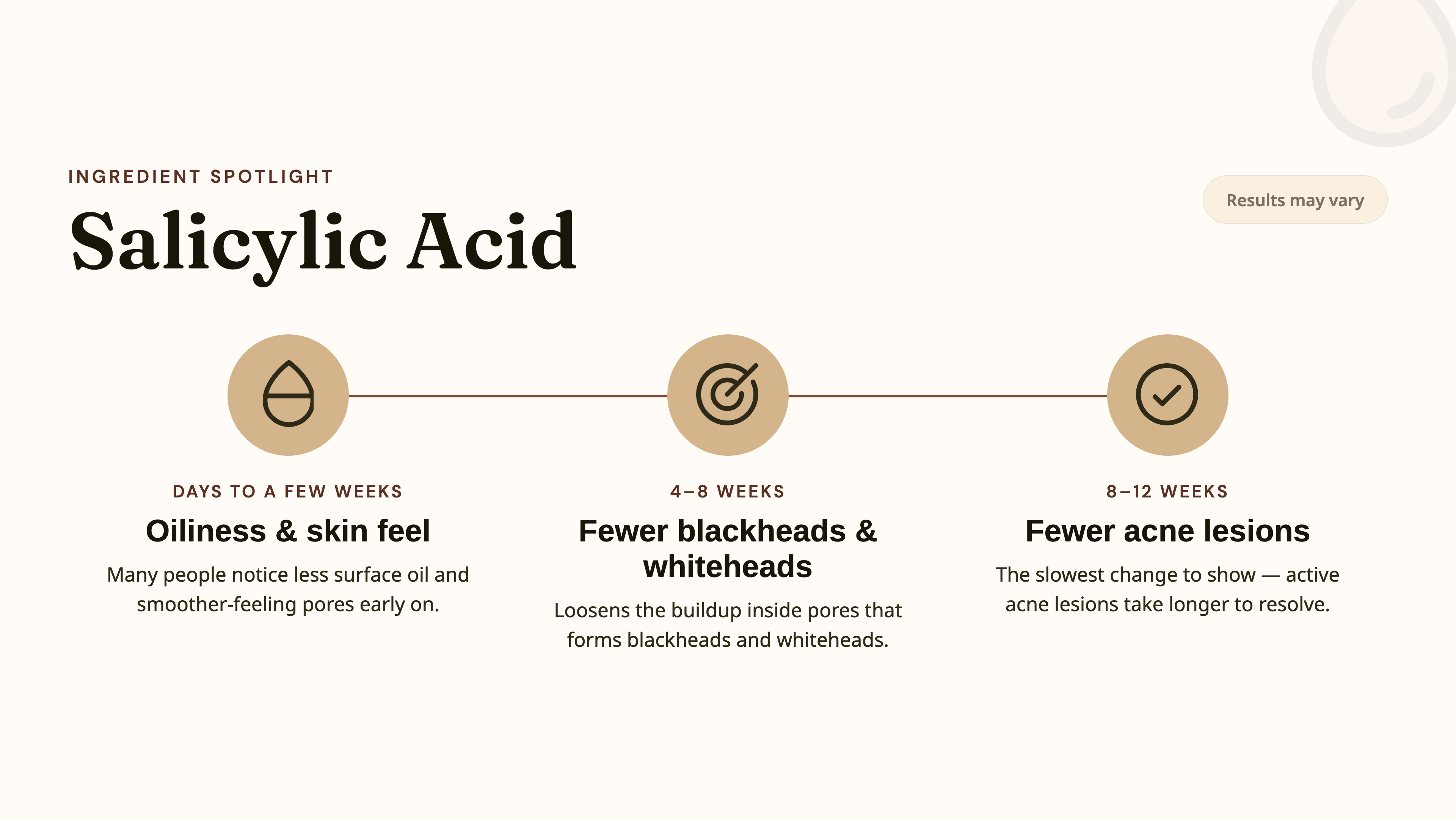
Oiliness and skin feel: days to a few weeks
Fewer blackheads and whiteheads: 4–8 weeks
Fewer acne lesions: 8–12 weeks
Salicylic acid loosens the buildup that forms blackheads and whiteheads. Some people notice less surface oil and smoother pores within the first weeks of use, but it takes longer to see fewer acne lesions.
Dryness and peeling are common early on, especially if you're layering it with benzoyl peroxide or a retinoid. Scale back if your skin is unhappy, and try a gentler acid (like PHA) if your skin continues to be irritated.
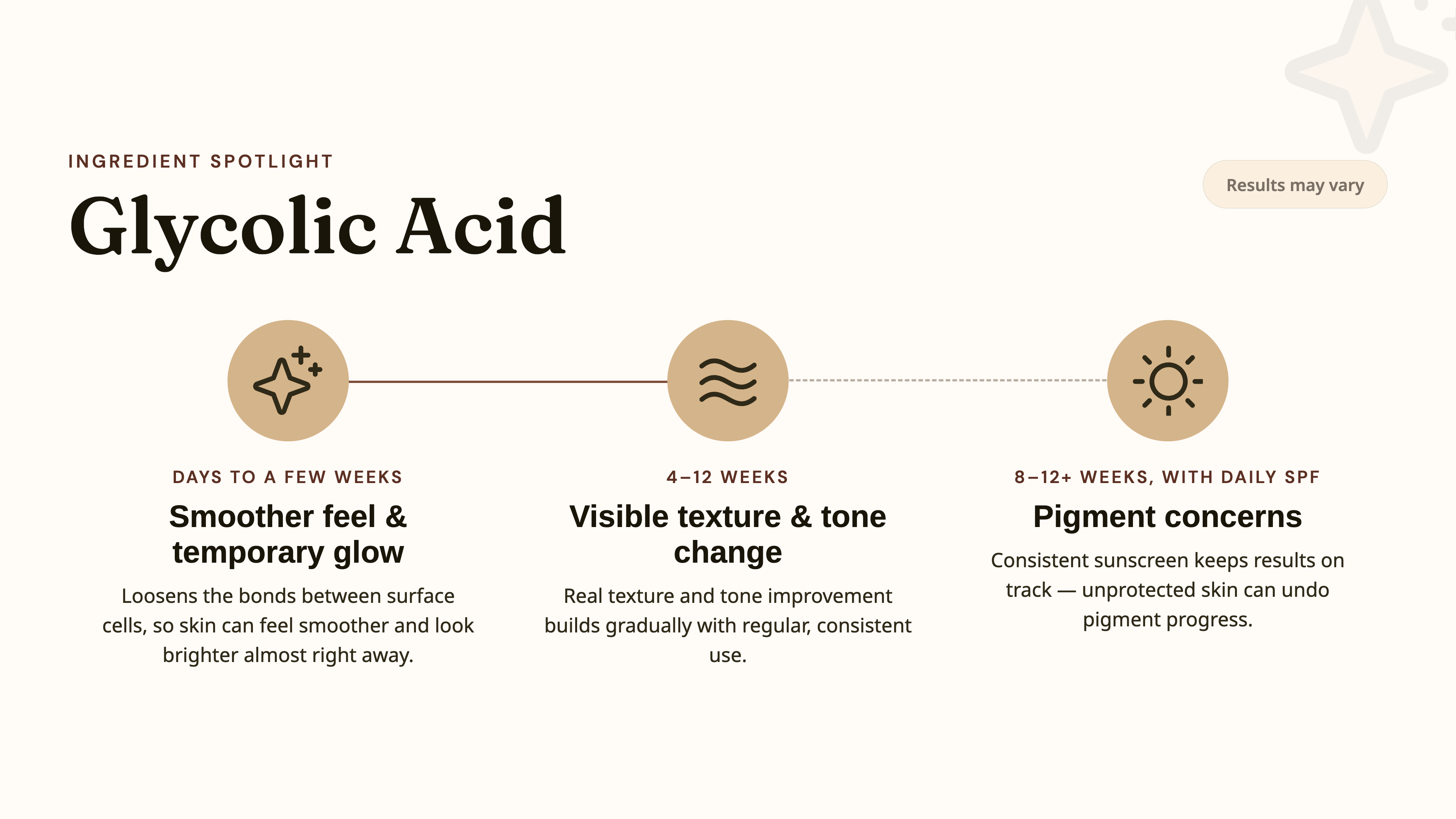
Smoother feel and temporary glow: days to a few weeks
Visible texture and tone change: 4–12 weeks
Pigment concerns: 8–12+ weeks, with daily SPF
Glycolic acid is an exfoliant that loosens the bonds between surface skin cells. With regular use, skin can feel smoother and look brighter within days. Real texture and tone change builds over the following weeks, and consistent sunscreen will help keep your results on the right timeline.
Some stinging or flaking is normal while your skin adjusts. Ease in with 1–3 nights a week and build up from there.
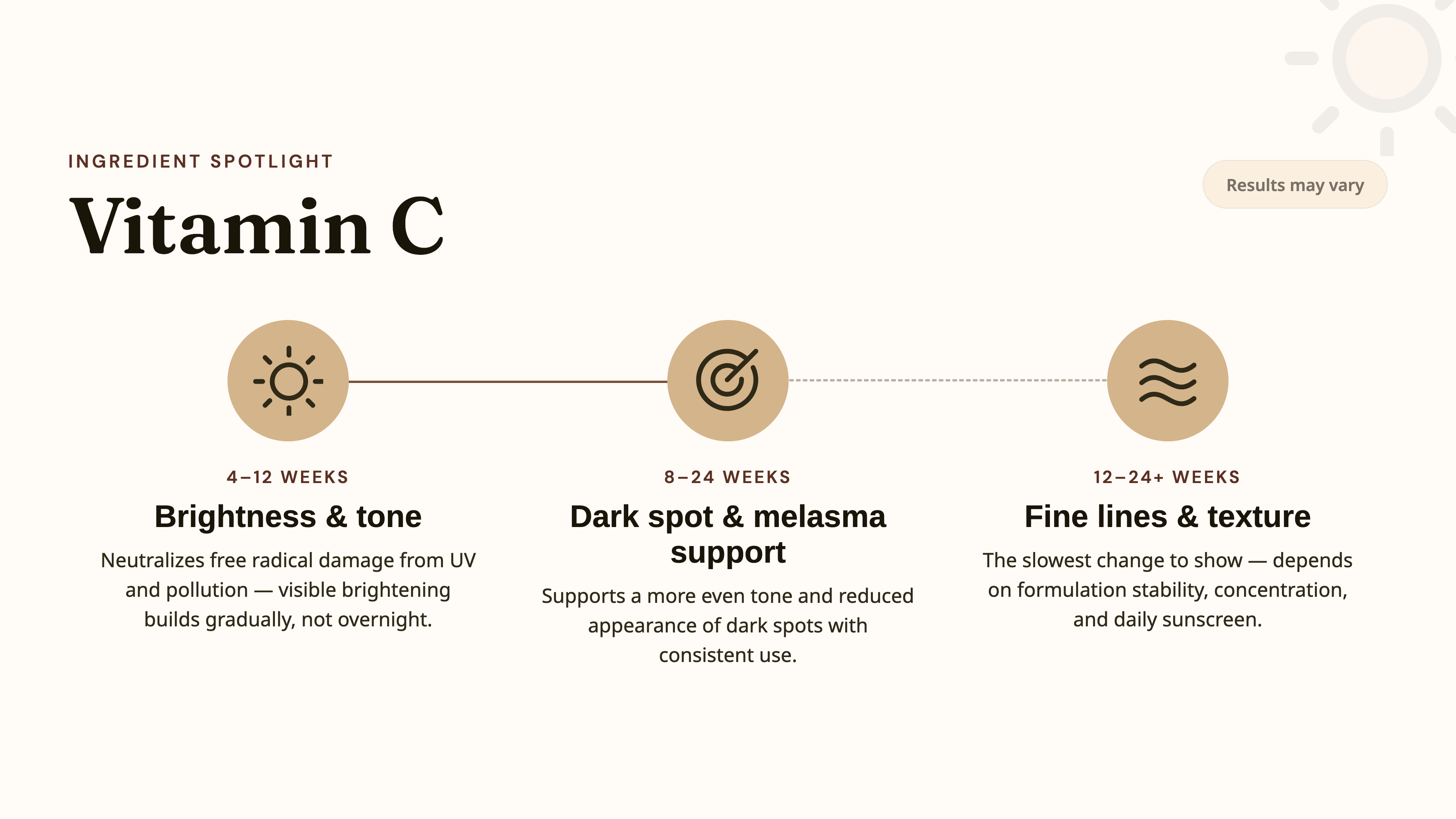
Brightness and tone: 4–12 weeks
Dark spot and melasma support: 8–24 weeks
Fine lines and texture: 12–24+ weeks
A stable, well-formulated vitamin C neutralizes free radical damage from UV and pollution the moment it reaches your skin. You won't see immediate impact. Visible benefits— even tone, reduced appearance of dark spots, and smoother-looking skin—develop gradually. Results depend on formulation stability, concentration, packaging, adherence, and sun protection. Without daily sunscreen, faded spots can start to reappear.
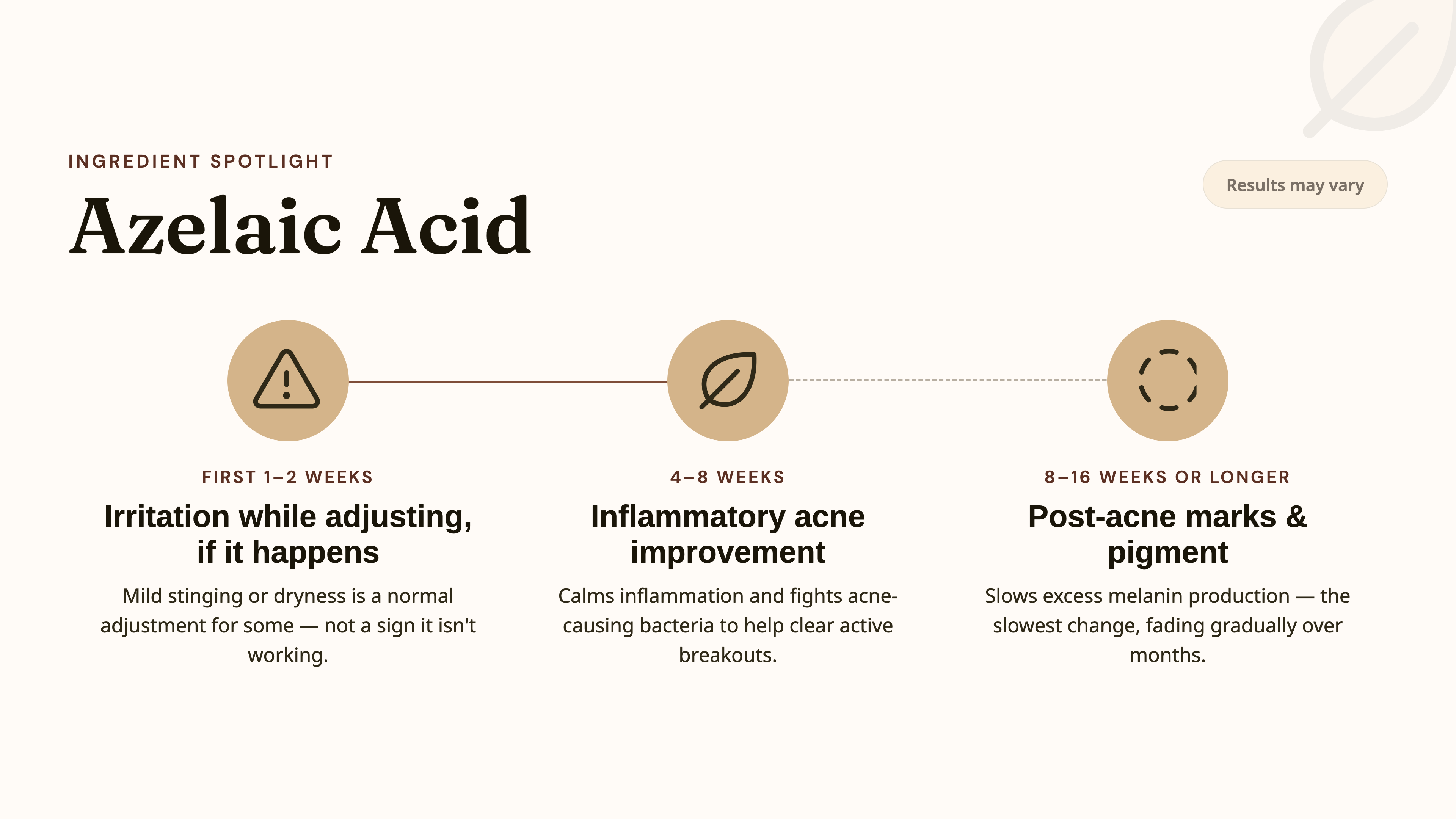
Irritation while adjusting, if it happens: first 1–2 weeks
Inflammatory acne improvement: 4–8 weeks
Post-acne marks and pigment: 8–16 weeks or longer
Azelaic acid calms inflammation, fights acne-causing bacteria, and stops dead skin cells from sticking to each other to keep pores clear.
It works on active breakouts and congestion relatively quickly, with many users seeing results in the first couple of months. Pigment fades more slowly, and it can take several months for the acid to slow down the production of excess melanin.
Mild stinging or dryness in the first couple of weeks is a normal adjustment for some users. Irritation is not required for azelaic acid to work, so if your skin doesn't react, that is a good thing!
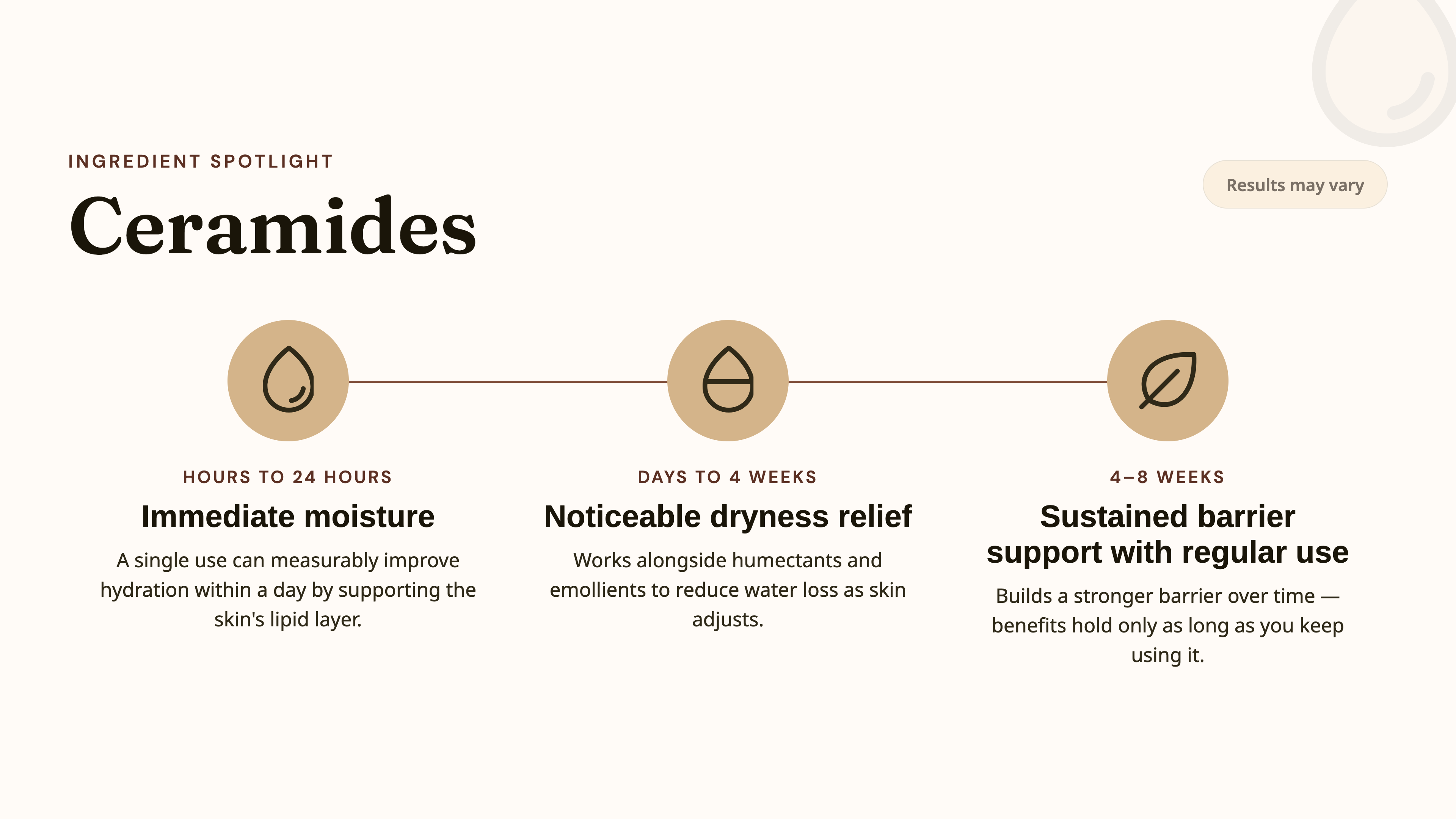
Immediate moisture: hours to 24 hours
Noticeable dryness relief: days to 4 weeks
Sustained barrier support with regular use: 4–8 weeks
Ceramides are part of the lipid layer that holds your skin barrier together, working alongside the humectants and emollients in your moisturizer to reduce water loss. A single use can measurably improve hydration within a day, and regular use can build a stronger skin barrier over 1-2 months.
Barrier support holds up for as long as you keep using it. Stop, and whatever's driving your dryness — a dry climate, over-exfoliation, a compromised barrier — will likely cause your dryness to re-emerge.
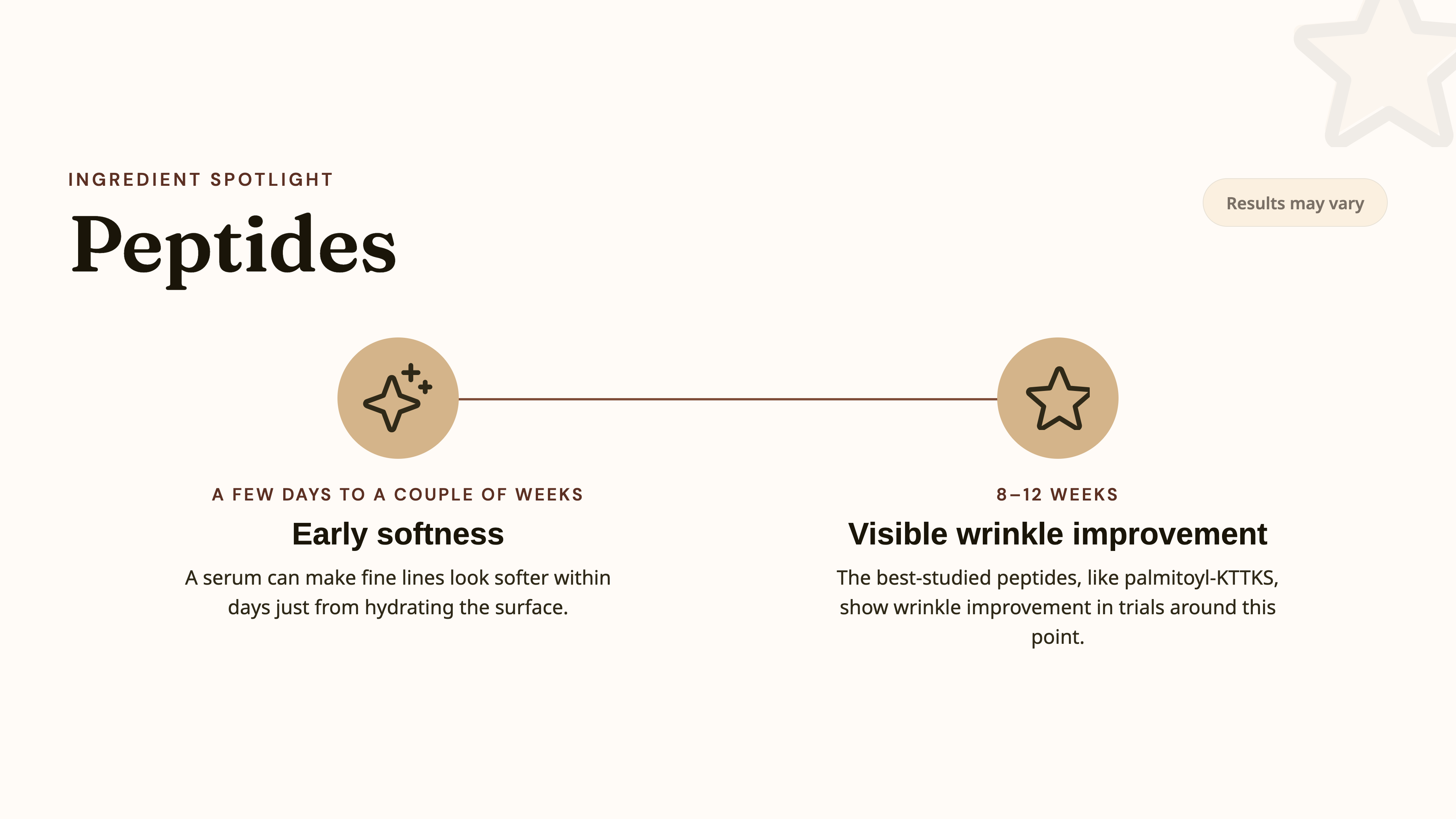
Early softness: a few days to a couple of weeks
Visible wrinkle improvement: 8–12 weeks
Peptides aren't one ingredient with one timeline — different peptides signal different things, at different concentrations, with different evidence behind them. Palmitoyl-KTTKS is one of the better-studied ones, with wrinkle improvement showing up around 8–12 weeks in controlled trials. Evidence certainty varies a lot depending on the peptide.
A serum can make lines look softer within days just from hydrating the surface. Don't expect every peptide product to match the timeline of the best-studied options.
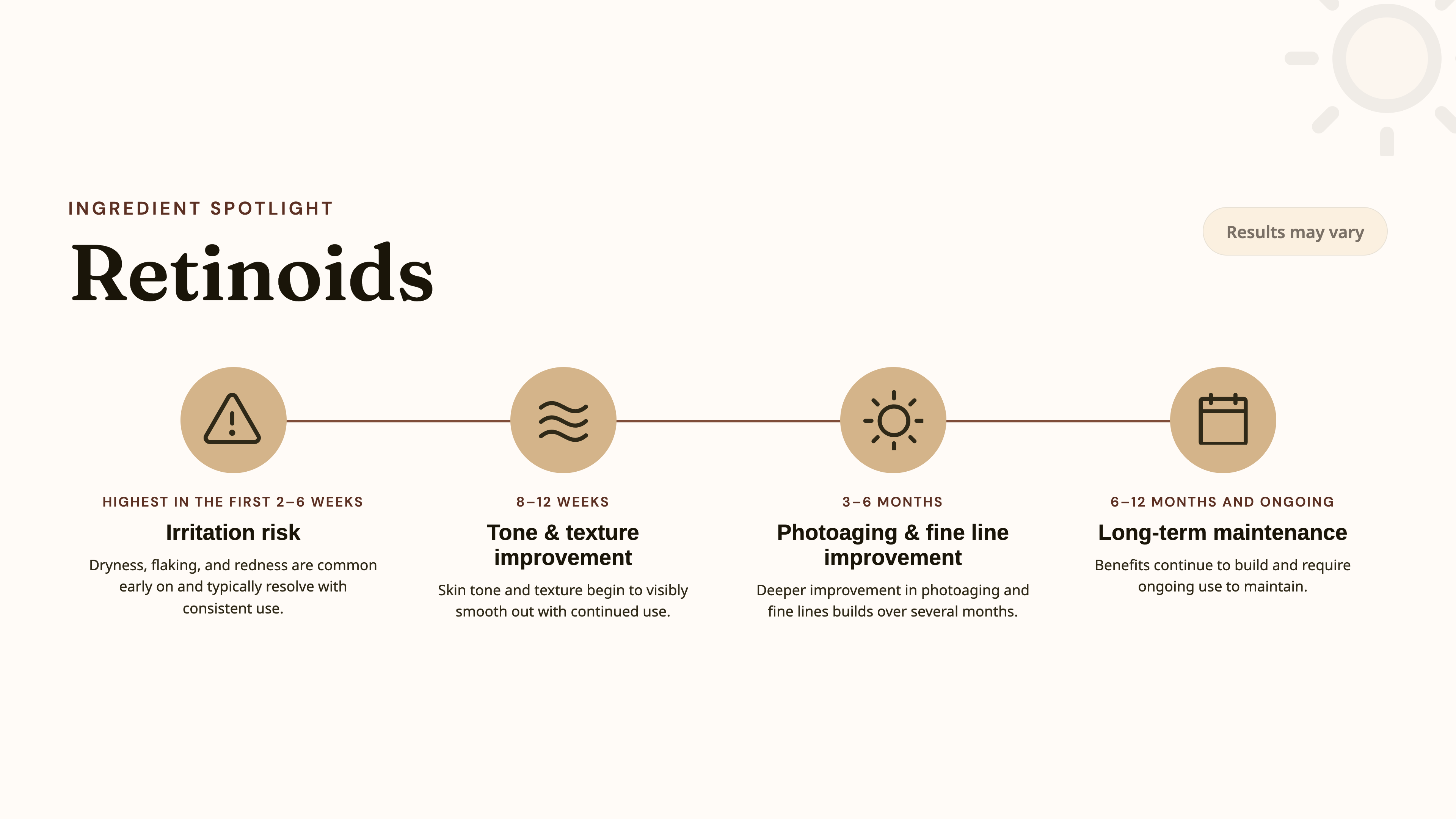
Irritation risk: highest in the first 2–6 weeks
Tone and texture improvement: 8–12 weeks
Photoaging and fine line improvement: 3–6 months
Long-term maintenance: 6–12 months and ongoing
Retinoids cover a range — from prescription tretinoin to over-the-counter options like adapalene, retinol and retinaldehyde. They're not interchangeable in strength, stability, or speed, so these timelines are an average.
Dryness, flaking, and redness in the early weeks are common irritation, and they resolve for most people with consistent use and barrier support. If it's persistent or severe, cut back frequency or check in with a dermatologist rather than pushing through it. A temporary breakout can happen in acne-prone skin, but it's not required — and it doesn't mean anything's wrong if it doesn't happen to you.
